Rabu, 24 Februari 2010

[G435.Ebook] PDF Download The Alchemy of Growth: Practical Insights for Building the Enduring Enterprise, by Mehrdad Baghai, Steve Coley, David White, Stephen Coley

PDF Download The Alchemy of Growth: Practical Insights for Building the Enduring Enterprise, by Mehrdad Baghai, Steve Coley, David White, Stephen Coley

The Alchemy Of Growth: Practical Insights For Building The Enduring Enterprise, By Mehrdad Baghai, Steve Coley, David White, Stephen Coley. In undertaking this life, lots of people constantly try to do and also get the most effective. New understanding, encounter, session, as well as everything that could improve the life will be done. However, many individuals often really feel puzzled to obtain those points. Feeling the minimal of encounter and also sources to be much better is one of the lacks to have. Nevertheless, there is a quite basic thing that can be done. This is exactly what your instructor always manoeuvres you to do this. Yeah, reading is the solution. Reviewing an e-book as this The Alchemy Of Growth: Practical Insights For Building The Enduring Enterprise, By Mehrdad Baghai, Steve Coley, David White, Stephen Coley and other referrals can enhance your life high quality. Exactly how can it be?

The Alchemy of Growth: Practical Insights for Building the Enduring Enterprise, by Mehrdad Baghai, Steve Coley, David White, Stephen Coley

The Alchemy of Growth: Practical Insights for Building the Enduring Enterprise, by Mehrdad Baghai, Steve Coley, David White, Stephen Coley


The Alchemy of Growth: Practical Insights for Building the Enduring Enterprise, by Mehrdad Baghai, Steve Coley, David White, Stephen Coley

PDF Download The Alchemy of Growth: Practical Insights for Building the Enduring Enterprise, by Mehrdad Baghai, Steve Coley, David White, Stephen Coley

The Alchemy Of Growth: Practical Insights For Building The Enduring Enterprise, By Mehrdad Baghai, Steve Coley, David White, Stephen Coley. Checking out makes you a lot better. Who states? Several wise words claim that by reading, your life will be better. Do you think it? Yeah, show it. If you require the book The Alchemy Of Growth: Practical Insights For Building The Enduring Enterprise, By Mehrdad Baghai, Steve Coley, David White, Stephen Coley to review to verify the smart words, you can see this web page perfectly. This is the site that will provide all the books that most likely you need. Are guide's collections that will make you feel interested to check out? One of them right here is the The Alchemy Of Growth: Practical Insights For Building The Enduring Enterprise, By Mehrdad Baghai, Steve Coley, David White, Stephen Coley that we will recommend.

Why must be this e-book The Alchemy Of Growth: Practical Insights For Building The Enduring Enterprise, By Mehrdad Baghai, Steve Coley, David White, Stephen Coley to read? You will certainly never get the knowledge and also encounter without obtaining by yourself there or trying on your own to do it. Hence, reviewing this publication The Alchemy Of Growth: Practical Insights For Building The Enduring Enterprise, By Mehrdad Baghai, Steve Coley, David White, Stephen Coley is needed. You could be fine and proper sufficient to get exactly how vital is reviewing this The Alchemy Of Growth: Practical Insights For Building The Enduring Enterprise, By Mehrdad Baghai, Steve Coley, David White, Stephen Coley Also you constantly review by obligation, you could sustain on your own to have reading book routine. It will certainly be so useful and enjoyable after that.

However, how is the way to get this e-book The Alchemy Of Growth: Practical Insights For Building The Enduring Enterprise, By Mehrdad Baghai, Steve Coley, David White, Stephen Coley Still perplexed? It does not matter. You can appreciate reviewing this publication The Alchemy Of Growth: Practical Insights For Building The Enduring Enterprise, By Mehrdad Baghai, Steve Coley, David White, Stephen Coley by on-line or soft documents. Simply download and install guide The Alchemy Of Growth: Practical Insights For Building The Enduring Enterprise, By Mehrdad Baghai, Steve Coley, David White, Stephen Coley in the link given to go to. You will get this The Alchemy Of Growth: Practical Insights For Building The Enduring Enterprise, By Mehrdad Baghai, Steve Coley, David White, Stephen Coley by online. After downloading, you could conserve the soft data in your computer system or gizmo. So, it will certainly relieve you to read this publication The Alchemy Of Growth: Practical Insights For Building The Enduring Enterprise, By Mehrdad Baghai, Steve Coley, David White, Stephen Coley in specific time or location. It could be not yes to enjoy reading this book The Alchemy Of Growth: Practical Insights For Building The Enduring Enterprise, By Mehrdad Baghai, Steve Coley, David White, Stephen Coley, considering that you have bunches of work. However, with this soft data, you could appreciate reviewing in the downtime even in the voids of your tasks in workplace.

Once much more, reading habit will always give helpful benefits for you. You might not should spend sometimes to check out the e-book The Alchemy Of Growth: Practical Insights For Building The Enduring Enterprise, By Mehrdad Baghai, Steve Coley, David White, Stephen Coley Merely established apart several times in our extra or downtimes while having meal or in your workplace to review. This The Alchemy Of Growth: Practical Insights For Building The Enduring Enterprise, By Mehrdad Baghai, Steve Coley, David White, Stephen Coley will certainly show you brand-new point that you could do now. It will certainly assist you to boost the top quality of your life. Event it is merely an enjoyable publication The Alchemy Of Growth: Practical Insights For Building The Enduring Enterprise, By Mehrdad Baghai, Steve Coley, David White, Stephen Coley, you can be happier and more enjoyable to delight in reading.

The Alchemy of Growth: Practical Insights for Building the Enduring Enterprise, by Mehrdad Baghai, Steve Coley, David White, Stephen Coley

Growth unleashes benefits beyond the economic. It revitalizes organizations and invigorates the people in them, creating energy, a sense of purpose, and the glow of being on a winning team. Like the alchemy of old, it seeks to transform the everyday into the exalted by means that seem little short of magical. Yet growth is often elusive, achieved at unacceptable costs, or managed in fits and starts. Based on over three years of research and application at high-performing companies around the world, The Alchemy of Growth is a comprehensive, practical approach to initiating, achieving, and sustaining profitable growth—today and tomorrow. As the book shows, the secret is to manage business opportunities across three time horizons at once: extending and defending core businesses, building new businesses, and seeding options for the future. The Alchemy of Growth offers managers at all levels the tools and concepts for investing in the right initiatives, capabilities, and talent to propel their companies into the future.

  • Sales Rank: #281749 in Books
  • Brand: Baghai, Mehrdad/ Coley, Stephen/ White, David
  • Published on: 2000-07
  • Original language: English
  • Number of items: 1
  • Dimensions: 9.00" h x .68" w x 6.00" l, .80 pounds
  • Binding: Paperback
  • 272 pages

Amazon.com Review
Why do some companies come and go while others endure? According to McKinsey & Company, Inc. consultants Mehrdad Baghai, Stephen Coley, and David White, the secret to a lasting enterprise is sustained growth. In The Alchemy of Growth, the authors offer a practical guide for jumpstarting expansion and keeping it going. "Growth is a noble pursuit. It creates new jobs for the community and wealth for shareholders. It can turn ordinary companies into stimulating environments where employees find a sense of purpose in their work," they write. "Growth's transformative power is akin to the alchemy of old."

The authors describe the approaches that have succeeded in helping their corporate clients around the world to step up the pace. For instance, companies must simultaneously focus on "three horizons" critical to growth. The first is the current bread-and-butter of the firm; the second, the fast-developing entrepreneurial ventures; and the third, the ideas that will germinate into tomorrow's profits. The best part of the book: the real-life examples of firms that have transformed themselves from laggards to supercharged growth companies. Take Disney, for example. After founder Walt Disney's death in 1966, the company stagnated, with its theme park and film business slipping. But after Michael Eisner took over in 1984, Disney boosted its average annual returns to 29 percent, on the strength of growth in such new avenues as Disney stores, ESPN, and resort development. The Alchemy of Growth is an instructive handbook for managers interested in spurring their companies to new heights. --Dan Ring

From Library Journal
This slender volume is the latest in a growing number of books from accounting, management, or consulting giants. Here, the topic is that most elusive of business concepts, growth. Coauthors Baghai, Stephen Coley, and David White are partners at the renowned consulting firm of McKinsey & Company, specializing in growth strategies. They feel that the growth creation process has three stages: maximizing current business, building emerging issues, and developing viable options. This framework is used to examine successes and failures while exploring the interrelated issues of inertia, momentum, business history, opportunity, leadership, and sustained growth. The last third of the volume consists of two-page summaries of the 30 companies used as successful examples. The concepts are clear, logical, and well documented with footnotes, but this type of business book will date quickly even if the underlying theoretical framework is sound. Public and undergraduate libraries will find this an acceptable though optional purchase.APatrick J. Brunet, Western Wisconsin Technical Coll. Lib., LaCrosse
Copyright 1999 Reed Business Information, Inc.

Review
"Pragmatic, clearly written, and crammed with interesting tales about famous companies, [The Alchemy of Growth] could help transform the way a lot of corporations are managed in the fast-changing global economy." -- Bill Shepherd, Global Finance

"This book...is not a study to synthesize best practices from winning firms, but, rather, to conceive practical frameworks any company can utilize to help it grow....It provides pragmatic tools, models, and frameworks for thinking through growth opportunities and then executing them well." -- Allan J. Magrath, Across the Board

Most helpful customer reviews

0 of 0 people found the following review helpful.
Exhilarating and Exhausting
By tinotchka
This book provides a easy-to-understand mental model for thinking about organizational growth. However, the concept of growing and managing three "horizons" of growth at the same time exhilarates and exhausts. This book could be enhanced by incorporating sustainable principles like the Triple Bottom Line: People, Planet, and Prosperity.

31 of 32 people found the following review helpful.
A strategic stairway to business success
By Bill Godfrey
A perspective on corporate growth and change which works through the need to maintain a simultaneous focus on three 'horizons' - today's business, emerging businesses and longer term options and the implications for strategy, management and structures.
As you would expect of a book out of the McKinsey stable, this is on an issue of importance to business, is well researched and analysed and very readable and well presented. As you would also expect, it is focused on large corporates, and on strategies for their business success, as measured by exceptional growth and returns to stockholders.
It provides one important perspective on the issue of corporate growth and development, to be compared with other perspectives.
There are obvious comparisons with Collins & Porras: 'Built to Last' both in the concern with continuing exceptional performance over an extended period and in the care taken to explain the research base from which the findings are derived. However, whereas Collins & Porras are concerned primarily with values and culture, Baghai et al are primarily interested in strategies for the selection, development and management of a portfolio of businesses and the implications of those strategies for structuring, staffing and operations.
The fundamental thesis is simple and can be stated in a few propositions:
The companies that have been successful in maintaining high rates of growth with superior profitability are those that have learnt to manage well to three different time horizons at the same time - today's business, the next generation of emerging businesses, and the longer term options out of which the next generation of businesses will arise.
In order to develop longer term options into 'core profit engines', a series of measured steps (concerned with finding ways of profitably building core capabilities and markets) are required, which the authors call 'stairways'. In the nature of things, not all stairways will lead to future core businesses, so a variety of initiatives need to be carried forward together. Management of the 'stairways' should receive significant senior management attention.
The skills and temperaments required to manage current business, to develop new business and to search out viable future options are widely different one from the other. The key to maximising the profitability of today's business is excellence of execution. Emerging businesses require business builders - the typical entrepreneurial temperament, while the identification of future options requires lateral thinkers and visionaries.
In consequence, the style of organisation and internal culture most appropriate to each of these foci are also different. Large corporates tend to find difficulty in encompassing these very different cultures. The authors discuss in some depth the resulting issues of internal culture, recruitment, structuring and transition, and their strategic management.
The strength of the book is that the authors identify a key issue in business success - the development and maintenance of a vigorous portfolio of businesses over the longer term - and work through the implications with clarity and thoroughness.
The cost of that approach is that other equally significant issues are assumed or left in the background. It is necessary to balance the valuable perspective offered with others that are also important. It is also necessary to be aware of the underpinning tacit assumptions - for example, the underlying metaphor of organisation adopted by the authors appears to me to be much nearer that of the organisation as a (money) machine, than that of the organisation as an organism. There is a marked contrast with the emphasis in, for example de Geus: 'The Living Company'. This is not to say that either is wrong, only that neither is complete.

6 of 7 people found the following review helpful.
GREAT INSIGHTS BASED ON SOLID RESEARCH =s A WINNER.
By A Customer
This book is based on research on 30 companies in Asia, Australia, Europe, and North American, selected for exceptional sales and profit growth. The research findings reveal a three-phase pattern for growth which is analyzed and illustrated with cases. The pattern encompasses the embryonic, emergent, and mature phases of a business's life cycle. The underlying pattern is a continuous pipeline of business-building initiatives that focuses on three horizons: extending and defending the core business; building emerging businesses, and creating viable future opportunities. This examination of growth strategies proves highly enlightening. The combination of insights based on solid research yields a great book. The appendix profiles each of the firms the authors' studied. Recommended. Reviewed by Gerry Stern, founder, Stern & Associates, author of Stern's Sourcefinder: The Master Directory to HR and Business Management Information & Resources, Stern's CyberSpace SourceFinder, and Stern's Compensation and Benefits SourceFinder.

See all 20 customer reviews...

The Alchemy of Growth: Practical Insights for Building the Enduring Enterprise, by Mehrdad Baghai, Steve Coley, David White, Stephen Coley PDF
The Alchemy of Growth: Practical Insights for Building the Enduring Enterprise, by Mehrdad Baghai, Steve Coley, David White, Stephen Coley EPub
The Alchemy of Growth: Practical Insights for Building the Enduring Enterprise, by Mehrdad Baghai, Steve Coley, David White, Stephen Coley Doc
The Alchemy of Growth: Practical Insights for Building the Enduring Enterprise, by Mehrdad Baghai, Steve Coley, David White, Stephen Coley iBooks
The Alchemy of Growth: Practical Insights for Building the Enduring Enterprise, by Mehrdad Baghai, Steve Coley, David White, Stephen Coley rtf
The Alchemy of Growth: Practical Insights for Building the Enduring Enterprise, by Mehrdad Baghai, Steve Coley, David White, Stephen Coley Mobipocket
The Alchemy of Growth: Practical Insights for Building the Enduring Enterprise, by Mehrdad Baghai, Steve Coley, David White, Stephen Coley Kindle

The Alchemy of Growth: Practical Insights for Building the Enduring Enterprise, by Mehrdad Baghai, Steve Coley, David White, Stephen Coley PDF

The Alchemy of Growth: Practical Insights for Building the Enduring Enterprise, by Mehrdad Baghai, Steve Coley, David White, Stephen Coley PDF

The Alchemy of Growth: Practical Insights for Building the Enduring Enterprise, by Mehrdad Baghai, Steve Coley, David White, Stephen Coley PDF

Selasa, 23 Februari 2010

[X109.Ebook] Get Free Ebook Breaking Bad and Philosophy: Badder Living through Chemistry (Popular Culture and Philosophy), by Robert Arp, David R. Koepsell

Get Free Ebook Breaking Bad and Philosophy: Badder Living through Chemistry (Popular Culture and Philosophy), by Robert Arp, David R. Koepsell

Breaking Bad And Philosophy: Badder Living Through Chemistry (Popular Culture And Philosophy), By Robert Arp, David R. Koepsell Just how can you change your mind to be more open? There several sources that could aid you to enhance your ideas. It can be from the various other experiences and also tale from some individuals. Reserve Breaking Bad And Philosophy: Badder Living Through Chemistry (Popular Culture And Philosophy), By Robert Arp, David R. Koepsell is one of the relied on resources to get. You can discover a lot of books that we discuss here in this site. And currently, we reveal you one of the best, the Breaking Bad And Philosophy: Badder Living Through Chemistry (Popular Culture And Philosophy), By Robert Arp, David R. Koepsell

Breaking Bad and Philosophy: Badder Living through Chemistry (Popular Culture and Philosophy), by Robert Arp, David R. Koepsell

Breaking Bad and Philosophy: Badder Living through Chemistry (Popular Culture and Philosophy), by Robert Arp, David R. Koepsell


Breaking Bad and Philosophy: Badder Living through Chemistry (Popular Culture and Philosophy), by Robert Arp, David R. Koepsell

Get Free Ebook Breaking Bad and Philosophy: Badder Living through Chemistry (Popular Culture and Philosophy), by Robert Arp, David R. Koepsell

When you are hurried of task target date and also have no idea to obtain motivation, Breaking Bad And Philosophy: Badder Living Through Chemistry (Popular Culture And Philosophy), By Robert Arp, David R. Koepsell book is among your options to take. Reserve Breaking Bad And Philosophy: Badder Living Through Chemistry (Popular Culture And Philosophy), By Robert Arp, David R. Koepsell will certainly offer you the ideal source and also point to obtain inspirations. It is not just regarding the jobs for politic business, administration, economics, and also various other. Some bought tasks to make some fiction works also need inspirations to get rid of the work. As what you need, this Breaking Bad And Philosophy: Badder Living Through Chemistry (Popular Culture And Philosophy), By Robert Arp, David R. Koepsell will most likely be your option.

This is why we advise you to always see this resource when you require such book Breaking Bad And Philosophy: Badder Living Through Chemistry (Popular Culture And Philosophy), By Robert Arp, David R. Koepsell, every book. By online, you might not go to get guide shop in your city. By this online collection, you could locate the book that you really intend to check out after for long time. This Breaking Bad And Philosophy: Badder Living Through Chemistry (Popular Culture And Philosophy), By Robert Arp, David R. Koepsell, as one of the recommended readings, has the tendency to remain in soft documents, as all book collections right here. So, you may additionally not wait for few days later to get and also read guide Breaking Bad And Philosophy: Badder Living Through Chemistry (Popular Culture And Philosophy), By Robert Arp, David R. Koepsell.

The soft documents means that you have to go to the web link for downloading and afterwards conserve Breaking Bad And Philosophy: Badder Living Through Chemistry (Popular Culture And Philosophy), By Robert Arp, David R. Koepsell You have actually possessed guide to review, you have actually presented this Breaking Bad And Philosophy: Badder Living Through Chemistry (Popular Culture And Philosophy), By Robert Arp, David R. Koepsell It is not difficult as visiting guide stores, is it? After getting this short explanation, hopefully you can download one and also start to review Breaking Bad And Philosophy: Badder Living Through Chemistry (Popular Culture And Philosophy), By Robert Arp, David R. Koepsell This book is quite easy to check out whenever you have the leisure time.

It's no any faults when others with their phone on their hand, and you're too. The difference might last on the material to open up Breaking Bad And Philosophy: Badder Living Through Chemistry (Popular Culture And Philosophy), By Robert Arp, David R. Koepsell When others open up the phone for talking as well as speaking all points, you could often open and also read the soft file of the Breaking Bad And Philosophy: Badder Living Through Chemistry (Popular Culture And Philosophy), By Robert Arp, David R. Koepsell Naturally, it's unless your phone is available. You could likewise make or save it in your laptop or computer that alleviates you to review Breaking Bad And Philosophy: Badder Living Through Chemistry (Popular Culture And Philosophy), By Robert Arp, David R. Koepsell.

Breaking Bad and Philosophy: Badder Living through Chemistry (Popular Culture and Philosophy), by Robert Arp, David R. Koepsell

Breaking Bad, hailed by Stephen King, Chuck Klosterman, and many others as the best of all TV dramas, tells the story of a man whose life changes because of the medical death sentence of an advanced cancer diagnosis. The show depicts his metamorphosis from inoffensive chemistry teacher to feared drug lord and remorseless killer. Driven at first by the desire to save his family from destitution, he risks losing his family altogether because of his new life of crime.

In defiance of the tradition that viewers demand a TV character who never changes, Breaking Bad is all about the process of change, with each scene carrying forward the morphing of Walter White into the terrible Heisenberg.

Can a person be transformed as the result of a few key life choices? Does everyone have the potential to be a ruthless criminal? How will we respond to the knowledge that we will be dead in six months? Is human life subject to laws as remorseless as chemical equations? When does injustice validate brutal retaliation? Why are drug addicts unsuitable for operating the illegal drug business? How can TV viewers remain loyal to a series where the hero becomes the villain? Does Heisenberg’s Principle of Uncertainty rule our destinies?

In Breaking Bad and Philosophy, a hand-picked squad of professional thinkers investigate the crimes of Walter White, showing how this story relates to the major themes of philosophy and the major life decisions facing all of us.

  • Sales Rank: #283098 in eBooks
  • Published on: 2012-06-20
  • Released on: 2012-06-20
  • Format: Kindle eBook

From the Back Cover
This volume considers the numerous philosophical ideas and arguments found in and inspired by the critically acclaimed series Breaking Bad. This show garnered both critical and popular attention for its portrayal of a cancer-stricken, middle-aged, middle-class, high school chemistry teacher’s drift into the dark world of selling methamphetamine to support his family. Its characters, situations, and aesthetic raise serious and familiar philosophical issues, especially related to ethics and morality. The show provokes a bevy of rich questions and discussion points, such as: What are the ethical issues surrounding drugs? What lessons about existentialism and fatalism does the show present? How does the show grapple with the concept of the end ‘justifying’ the means? Is Walt really free not to ‘break bad’? Can he be redeemed? What is the definition and nature of badness (or evil) itself? Contributors address these and other questions as they dissect the legacy of the show and discuss its contributions to philosophical conversations.

About the Author
Kevin S. Decker is Professor of Philosophy at Eastern Washington University, USA. He is the author of Who is Who? The Philosophy of Doctor Who and has written many chapters in books on philosophy and popular culture as well as journal articles on ethics, social theory, and political philosophy.�


David R. Koepsell has been a tenured associate professor of philosophy at the Delft University of Technology, Netherlands, and a Visiting Professor at UNAM, Instituto de Filosoficas and the Unidad Posgrado, Mexico.�

Robert Arp is the author of Scenario Visualization: An Evolutionary Account of Creative Problem Solving and�co-author of Philosophy DeMYSTiFieD, Critical Thinking: An Introduction to Reasoning Well, 2nd Edition, and What's Good on TV? Teaching Ethics through Television. He is also editor of 1001 Ideas That Changed the Way We Think, South Park and Philosophy, Tattoos-Philosophy for Everyone: I Ink, Therefore I Am, Psych and Philosophy, Homeland and Philosophy, and The Devil and Philosophy.

Most helpful customer reviews

38 of 42 people found the following review helpful.
Read.Think. Enjoy
By Marty3
Unless you are a failed philosopy major, aren't a Breaking Bad fan, or have a serious vendetta against Open Court, you can't help but enjoy this stimulating collection of essays. Used to be the word Philosophy would numb most laymen. How wonderful that philosophy has breached the ivory tower and is now a discipline accesible to all. Questions about choices, about health and mortal illness, about responsibility, about good and evil, all central issues in Breaking Bad are discussed and analyzed from different points of view and with some different conclusions. But each essay inspires us to really THINK instead of simply watch. The whole experience of reading this book and the other Philosophy and Popular culture series is that of having a great conversation at the end of a really good movie. Do people do that anymore? Well worth buying, reading and discussing.

21 of 25 people found the following review helpful.
Breaking Philosophy for the Masses
By Matty B
This latest entry in Open Court's 'Philosophy' series makes a fun and thought provoking companion piece to AMC's drug-fueled serial drama. Breaking Bad is a show that dwells in the muck and the murk of moral greyness and that continually asks hard questions about right and wrong, self-service and justifiability, and the choices that can lead any person to ends both good and evil...and Breaking Bad & Philosophy does an exceptional job of probing beyond the questions that lie on the show's surface and delving into issues even more deeply embedded in its DNA.

Essays like Anderson & Lopez's "Meth, Liberty, & the Pursuit of Happiness," Kimberly Baltzer-Jaray's "Finding Happiness in a Black Hat," and Denise Du Vernay's "Breaking Bonds" (a thoughtful deconstruction of the part that gender roles, sexual politics, and feminist philosophies play in the show's narrative) all take subject matter that is woven into the series' fabric and explore their chosen topics with care and concern, looking at the show through a variety of analytical prisms.

Not every included essay hits the same high notes, but there is enough substance and enough fun in these pages to warrant perusing. If you're already a fan of Breaking Bad, you'll enjoy the painstaking detail with which these authors have interpreted the show and its many pet themes.

And like the best entries in the Philosophy books, BB&P explores age old ideas in the light of our latest pop cultural obsessions, providing a read that relates complex issues to a contemporary audience who might not otherwise realize the depth and the breadth of the topics being dissected each week by their favorite Appointment TV Shows.

Du Vernay's "Breaking Bonds" is my personal favorite of all the book's chapters, but there are many standout pieces that make it well worth your time. Overall, a great summer read!

9 of 10 people found the following review helpful.
Could This Be Me?
By Vincent Fouchi
Are we all on the verge of "Breaking Bad?" Philosophy has a way of making you see things in many different ways. It seems that your world isn't as settled as you think it is. If you loved the series you will enjoy this book.

See all 28 customer reviews...

Breaking Bad and Philosophy: Badder Living through Chemistry (Popular Culture and Philosophy), by Robert Arp, David R. Koepsell PDF
Breaking Bad and Philosophy: Badder Living through Chemistry (Popular Culture and Philosophy), by Robert Arp, David R. Koepsell EPub
Breaking Bad and Philosophy: Badder Living through Chemistry (Popular Culture and Philosophy), by Robert Arp, David R. Koepsell Doc
Breaking Bad and Philosophy: Badder Living through Chemistry (Popular Culture and Philosophy), by Robert Arp, David R. Koepsell iBooks
Breaking Bad and Philosophy: Badder Living through Chemistry (Popular Culture and Philosophy), by Robert Arp, David R. Koepsell rtf
Breaking Bad and Philosophy: Badder Living through Chemistry (Popular Culture and Philosophy), by Robert Arp, David R. Koepsell Mobipocket
Breaking Bad and Philosophy: Badder Living through Chemistry (Popular Culture and Philosophy), by Robert Arp, David R. Koepsell Kindle

Breaking Bad and Philosophy: Badder Living through Chemistry (Popular Culture and Philosophy), by Robert Arp, David R. Koepsell PDF

Breaking Bad and Philosophy: Badder Living through Chemistry (Popular Culture and Philosophy), by Robert Arp, David R. Koepsell PDF

Breaking Bad and Philosophy: Badder Living through Chemistry (Popular Culture and Philosophy), by Robert Arp, David R. Koepsell PDF

Senin, 15 Februari 2010

[V733.Ebook] Get Free Ebook Modern Mandarin Chinese Grammar: A Practical Guide (Modern Grammars)

Get Free Ebook Modern Mandarin Chinese Grammar: A Practical Guide (Modern Grammars)

Downloading guide Modern Mandarin Chinese Grammar: A Practical Guide (Modern Grammars) in this web site listings could offer you a lot more benefits. It will reveal you the most effective book collections and also completed collections. Many books can be found in this web site. So, this is not just this Modern Mandarin Chinese Grammar: A Practical Guide (Modern Grammars) Nonetheless, this publication is described review because it is a motivating publication to offer you a lot more opportunity to obtain experiences and ideas. This is straightforward, check out the soft documents of the book Modern Mandarin Chinese Grammar: A Practical Guide (Modern Grammars) and you get it.

Modern Mandarin Chinese Grammar: A Practical Guide (Modern Grammars)

Modern Mandarin Chinese Grammar: A Practical Guide (Modern Grammars)


Modern Mandarin Chinese Grammar: A Practical Guide (Modern Grammars)

Get Free Ebook Modern Mandarin Chinese Grammar: A Practical Guide (Modern Grammars)

Modern Mandarin Chinese Grammar: A Practical Guide (Modern Grammars) When writing can alter your life, when creating can enhance you by supplying much money, why do not you try it? Are you still very confused of where understanding? Do you still have no concept with exactly what you are visiting create? Currently, you will require reading Modern Mandarin Chinese Grammar: A Practical Guide (Modern Grammars) An excellent writer is a good user at once. You can specify how you write depending on what books to check out. This Modern Mandarin Chinese Grammar: A Practical Guide (Modern Grammars) can help you to fix the problem. It can be one of the appropriate resources to develop your writing ability.

Why ought to be this e-book Modern Mandarin Chinese Grammar: A Practical Guide (Modern Grammars) to check out? You will certainly never obtain the expertise as well as encounter without obtaining by yourself there or trying on your own to do it. For this reason, reading this book Modern Mandarin Chinese Grammar: A Practical Guide (Modern Grammars) is required. You could be great as well as proper enough to obtain exactly how vital is reviewing this Modern Mandarin Chinese Grammar: A Practical Guide (Modern Grammars) Even you always check out by commitment, you could sustain on your own to have reading e-book routine. It will certainly be so useful as well as fun after that.

But, just how is the means to obtain this book Modern Mandarin Chinese Grammar: A Practical Guide (Modern Grammars) Still puzzled? No matter. You could enjoy reviewing this book Modern Mandarin Chinese Grammar: A Practical Guide (Modern Grammars) by online or soft documents. Just download and install guide Modern Mandarin Chinese Grammar: A Practical Guide (Modern Grammars) in the link given to see. You will obtain this Modern Mandarin Chinese Grammar: A Practical Guide (Modern Grammars) by online. After downloading, you could save the soft file in your computer or gizmo. So, it will relieve you to review this publication Modern Mandarin Chinese Grammar: A Practical Guide (Modern Grammars) in particular time or place. It may be unsure to enjoy reading this e-book Modern Mandarin Chinese Grammar: A Practical Guide (Modern Grammars), because you have bunches of task. However, with this soft file, you can take pleasure in checking out in the leisure even in the gaps of your jobs in workplace.

Once more, reading habit will certainly consistently offer useful benefits for you. You could not have to invest sometimes to read the e-book Modern Mandarin Chinese Grammar: A Practical Guide (Modern Grammars) Simply alloted numerous times in our extra or spare times while having dish or in your workplace to check out. This Modern Mandarin Chinese Grammar: A Practical Guide (Modern Grammars) will certainly reveal you brand-new point that you could do now. It will aid you to boost the high quality of your life. Event it is simply an enjoyable book Modern Mandarin Chinese Grammar: A Practical Guide (Modern Grammars), you can be healthier as well as more fun to enjoy reading.

Modern Mandarin Chinese Grammar: A Practical Guide (Modern Grammars)

Will be shipped from US. Brand new copy.

  • Binding: Paperback

Most helpful customer reviews

See all customer reviews...

Modern Mandarin Chinese Grammar: A Practical Guide (Modern Grammars) PDF
Modern Mandarin Chinese Grammar: A Practical Guide (Modern Grammars) EPub
Modern Mandarin Chinese Grammar: A Practical Guide (Modern Grammars) Doc
Modern Mandarin Chinese Grammar: A Practical Guide (Modern Grammars) iBooks
Modern Mandarin Chinese Grammar: A Practical Guide (Modern Grammars) rtf
Modern Mandarin Chinese Grammar: A Practical Guide (Modern Grammars) Mobipocket
Modern Mandarin Chinese Grammar: A Practical Guide (Modern Grammars) Kindle

Modern Mandarin Chinese Grammar: A Practical Guide (Modern Grammars) PDF

Modern Mandarin Chinese Grammar: A Practical Guide (Modern Grammars) PDF

Modern Mandarin Chinese Grammar: A Practical Guide (Modern Grammars) PDF

Kamis, 11 Februari 2010

[E192.Ebook] PDF Ebook The Restless Clock: A History of the Centuries-Long Argument over What Makes Living Things Tick, by Jessica Riskin

PDF Ebook The Restless Clock: A History of the Centuries-Long Argument over What Makes Living Things Tick, by Jessica Riskin

Reading book The Restless Clock: A History Of The Centuries-Long Argument Over What Makes Living Things Tick, By Jessica Riskin, nowadays, will not require you to always get in the establishment off-line. There is a great area to get guide The Restless Clock: A History Of The Centuries-Long Argument Over What Makes Living Things Tick, By Jessica Riskin by online. This internet site is the best site with whole lots varieties of book collections. As this The Restless Clock: A History Of The Centuries-Long Argument Over What Makes Living Things Tick, By Jessica Riskin will certainly be in this publication, all books that you need will certainly correct here, too. Just search for the name or title of the book The Restless Clock: A History Of The Centuries-Long Argument Over What Makes Living Things Tick, By Jessica Riskin You could locate what exactly you are hunting for.

The Restless Clock: A History of the Centuries-Long Argument over What Makes Living Things Tick, by Jessica Riskin

The Restless Clock: A History of the Centuries-Long Argument over What Makes Living Things Tick, by Jessica Riskin


The Restless Clock: A History of the Centuries-Long Argument over What Makes Living Things Tick, by Jessica Riskin

PDF Ebook The Restless Clock: A History of the Centuries-Long Argument over What Makes Living Things Tick, by Jessica Riskin

Idea in deciding on the best book The Restless Clock: A History Of The Centuries-Long Argument Over What Makes Living Things Tick, By Jessica Riskin to read this day can be gotten by reading this resource. You could locate the best book The Restless Clock: A History Of The Centuries-Long Argument Over What Makes Living Things Tick, By Jessica Riskin that is offered in this globe. Not only had actually guides published from this country, but likewise the other nations. And also now, we mean you to review The Restless Clock: A History Of The Centuries-Long Argument Over What Makes Living Things Tick, By Jessica Riskin as one of the reading materials. This is just one of the best books to gather in this website. Consider the resource as well as look the books The Restless Clock: A History Of The Centuries-Long Argument Over What Makes Living Things Tick, By Jessica Riskin You could discover great deals of titles of guides offered.

Just how can? Do you assume that you do not need sufficient time to choose purchasing publication The Restless Clock: A History Of The Centuries-Long Argument Over What Makes Living Things Tick, By Jessica Riskin Don't bother! Simply sit on your seat. Open your device or computer as well as be on-line. You could open up or go to the web link download that we gave to get this The Restless Clock: A History Of The Centuries-Long Argument Over What Makes Living Things Tick, By Jessica Riskin By through this, you could obtain the on-line e-book The Restless Clock: A History Of The Centuries-Long Argument Over What Makes Living Things Tick, By Jessica Riskin Checking out the e-book The Restless Clock: A History Of The Centuries-Long Argument Over What Makes Living Things Tick, By Jessica Riskin by online can be actually done conveniently by waiting in your computer and kitchen appliance. So, you could continue every time you have spare time.

Checking out guide The Restless Clock: A History Of The Centuries-Long Argument Over What Makes Living Things Tick, By Jessica Riskin by on the internet could be also done conveniently every where you are. It appears that waiting the bus on the shelter, hesitating the listing for line, or other areas possible. This The Restless Clock: A History Of The Centuries-Long Argument Over What Makes Living Things Tick, By Jessica Riskin could accompany you because time. It will certainly not make you feel weary. Besides, in this manner will additionally enhance your life high quality.

So, just be right here, discover guide The Restless Clock: A History Of The Centuries-Long Argument Over What Makes Living Things Tick, By Jessica Riskin now and review that promptly. Be the initial to read this e-book The Restless Clock: A History Of The Centuries-Long Argument Over What Makes Living Things Tick, By Jessica Riskin by downloading in the link. We have a few other books to read in this site. So, you can find them also quickly. Well, now we have actually done to provide you the finest e-book to read today, this The Restless Clock: A History Of The Centuries-Long Argument Over What Makes Living Things Tick, By Jessica Riskin is actually appropriate for you. Never dismiss that you require this book The Restless Clock: A History Of The Centuries-Long Argument Over What Makes Living Things Tick, By Jessica Riskin to make far better life. On the internet e-book The Restless Clock: A History Of The Centuries-Long Argument Over What Makes Living Things Tick, By Jessica Riskin will really offer easy of every little thing to review as well as take the advantages.

The Restless Clock: A History of the Centuries-Long Argument over What Makes Living Things Tick, by Jessica Riskin

Today, a scientific explanation is not meant to ascribe agency to natural phenomena: we would not say a rock falls because it seeks the center of the earth. Even for living things, in the natural sciences and often in the social sciences, the same is true. A modern botanist would not say that plants pursue sunlight. This has not always been the case, nor, perhaps, was it inevitable. Since the seventeenth century, many thinkers have made agency, in various forms, central to science.


The Restless Clock examines the history of this principle, banning agency, in the life sciences. It also tells the story of dissenters embracing the opposite idea: that agency is essential to nature. The story begins with the automata of early modern Europe, as models for the new science of living things, and traces questions of science and agency through Descartes, Leibniz, Lamarck, and Darwin, among many others. Mechanist science, Jessica Riskin shows, had an associated theology: the argument from design, which found evidence for a designer in the mechanisms of nature. Rejecting such appeals to a supernatural God, the dissenters sought to naturalize agency rather than outsourcing it to a “divine engineer.” Their model cast living things not as passive but as active, self-making machines.


The conflict between passive- and active-mechanist approaches maintains a subterranean life in current science, shaping debates in fields such as evolutionary biology, cognitive science, and artificial intelligence. This history promises not only to inform such debates, but also our sense of the possibilities for what it means to engage in science—and even what it means to be alive.

  • Sales Rank: #540165 in eBooks
  • Published on: 2016-03-10
  • Released on: 2016-03-10
  • Format: Kindle eBook

Review
"The Restless Clock is a sweeping survey of the search for answers to the mystery of life. Riskin writes with clarity and wit, and the breadth of her scholarship is breathtaking." (Times Higher Education)

"At the heart of this scientific and cultural history is the concept of agency—the capacity to act—in nature. Riskin reveals how two distinct interpretations emerged from the mechanical Universe of the Enlightenment: Isaac Newton’s passive version, reliant on a divine tinkerer; and Gottfried Leibniz’s, which saw life as purposeful and 'self-transforming.' Riskin’s investigation of this duality, by way of Renaissance automatons, the gestation of evolutionary theory and quantum mechanics, is engrossing and illuminating."� (Nature)

“The Restless Clock is gorgeous and erudite, full of flute-playing androids and defecating ducks, animal spirits and invisible forces. It explores the hardest problems: where does life come from, and how is it that thoughts seem to dance out of grey matter? This is a book that brings history and language to bear on contemporary science—an important thing in itself in an age where science sometimes looks set to obliterate the humanities.” (Literary Review)

“In this rich, sweeping history, Riskin explores the dialectic between mechanistic models of nature from the mid-17th century forward. The author's main interest is in the notion of "agency" or purposefulness, which has been banned from scientific discourse by the dominant brute-mechanist paradigm; struggle between models, she argues, has been going on since modern science's inception and it influences debates today in the fields of evolutionary biology, cognitive science, and artificial intelligence. The work of luminaries such as Ren� Descartes, Gottfried Wilhelm Leibniz, Immanuel Kant, Jean-Baptiste Lamarck, and Charles Darwin is discussed, as well as that of contemporaries including Daniel Dennett, Richard Dawkins, and Stephen Jay Gould. But there are also the lesser knowns: the clockmakers, court mechanics, artisans, and their fantastic assortment of gadgets, automata, and androids that stood as models for the nascent life sciences. Riskin's accounts of these automata will come as a revelation to many readers, as she traces their history from late medieval, early Renaissance clock- and organ-driven devils and muttering Christs in churches to the robots of the post-World War II era. Fascinating on many levels, this book is accessible enough for a science-minded lay audience yet useful for students and scholars.” (Library Journal)

"Riskin’s book begins with Descartes and automata and traces the development of ideas about what animates living things up to the present. Science long ago moved away from theories about a divine clockmaker, but Riskin says some of the ideas from that period persist in surprising form. In particular, she says, atheist philosophers and scientists who regard consciousness in purely mechanistic terms, are inadvertently borrowing a schematic that, in a different time, struck people as evidence of God." (Boston Globe)

"The Restless Clock unravels the history of thinking about agency in the history of modern science so as to determine how mechanism and passivity became the dominant paradigm. In this expansive work—which draws on primary sources, correspondences between intellectual radicals, and archival materials from across the Western world—Riskin expertly demonstrates not only how the principle of passivity came to dominate modern science in the first place but also how this principle has influenced contemporary science. In taking on the problem of agency as supposedly banished from modern science, she compels us to think about how agency is actually essential in and to nature. Riskin captivatingly tells the story of this “centuries-long argument” over agency with the patience, precision, and the profound depth of explanation that history demands. The Restless Clock provides a much-needed investigation of how scientific understandings of material reality have been undergirded by historical understandings and calls for more deliberate historical analysis not only in scientific work, but also in critical analyses of scientific discourse and ideology. Such a work deepens our comprehension and awareness of the taken-for-granted ideologies that underpin modern science and, subsequently, the contemporary challenges posed to it by movements such as new materialisms. The Restless Clock will become a frequent reference for anyone interested in the matter of matter." (PopMatters)

"This timeless fascination with the question of what it means to be living has been explored most recently be Riskin, a history professor at Stanford University. In her latest book, The Restless Clock, she moves past the previous theologically and philosophically grounded discussions and looks at these questions of autonomy through the lens of a historian....By putting forth these questions in the words of past intellectuals, Riskin engages the reader in evaluating these existential questions with respect to big-picture “processes” like evolution, artificial intelligence and epistemology." (The Tartan)

“A wonderful contribution--and much needed corrective--to the history of European ideas about life and matter.” (Evelyn Fox Keller, author of The Mirage of a Space between Nature and Nurture)

"In this original and masterful book, Riskin recounts how scientists, philosophers, artists, and mechanics have wrestled with the nature of vital entities on the page and canvas, in the workshop and in stone. Here among others are Vaucanson and Kant, Descartes, Leibniz, and Darwin, defecating ducks, talking heads, and robots—giving us both the unfamiliar and the familiar in a new light, presented with deft analysis in luminous prose." (Daniel J. Kevles, author of The Baltimore Case)

"In this impressive cultural and intellectual narrative of the sciences of life and the techniques of mechanics, Riskin shows decisively how a richer and broader history of such sciences offers indispensable lessons for controversies surrounding agency and purpose in our understanding of the world. The Restless Clock explores fascinating projects launched by medieval churchmen and Renaissance artisans, enlightened philosophers and modern experimenters. It documents the construction of automata and experimentation in biology, the ambitions of Darwinism and of germ theory, the visions of cybernetics and of neurosciences. These stories reveal the power and importance of a tradition of living machines within the development of western sciences that has been strangely underestimated or dismissed. Its legacies today need just this kind of astute re-evaluation.

This book will become a central reference for many vital debates about the long history of life sciences and the possible futures of intelligent machines."
� (Simon Schaffer, coauthor of Leviathan and the Air-Pump)

"The Restless Clock examines more than four centuries of debate over the extent to which living beings can be understood as governed by 'mechanism,' and in the process it reorients our understanding of some of the most important themes and individuals in the Western canon during this period, including the thought of Descartes, Leibniz, Kant, Lamarck, and Darwin, plus contemporaries such as Dennett, Dawkins, and Gould, among others. Riskin has written a work of tremendous intellectual scope and accomplishment." (Ken Alder, author of The Lie Detectors)

About the Author
Jessica Riskin is professor of history at Stanford University and author of Science in the Age of Sensibility: The Sentimental Empiricists of the French Enlightenment, also published by the University of Chicago Press.

Most helpful customer reviews

6 of 6 people found the following review helpful.
Fascinating history of artificial life going back as far as ...
By Amazon Customer
Fascinating history of artificial life going back as far as a mechanical defecating duck and flute player in 18th century France, and up through the latest research on robots at MIT. The author incisively, and with a natural storyteller's skill, lays bare central constraining metaphors and contradictions about machinery and agency that permeate modern evolutionary biology and AI. Really interesting read and original, thoughtful approach.

See all 1 customer reviews...

The Restless Clock: A History of the Centuries-Long Argument over What Makes Living Things Tick, by Jessica Riskin PDF
The Restless Clock: A History of the Centuries-Long Argument over What Makes Living Things Tick, by Jessica Riskin EPub
The Restless Clock: A History of the Centuries-Long Argument over What Makes Living Things Tick, by Jessica Riskin Doc
The Restless Clock: A History of the Centuries-Long Argument over What Makes Living Things Tick, by Jessica Riskin iBooks
The Restless Clock: A History of the Centuries-Long Argument over What Makes Living Things Tick, by Jessica Riskin rtf
The Restless Clock: A History of the Centuries-Long Argument over What Makes Living Things Tick, by Jessica Riskin Mobipocket
The Restless Clock: A History of the Centuries-Long Argument over What Makes Living Things Tick, by Jessica Riskin Kindle

The Restless Clock: A History of the Centuries-Long Argument over What Makes Living Things Tick, by Jessica Riskin PDF

The Restless Clock: A History of the Centuries-Long Argument over What Makes Living Things Tick, by Jessica Riskin PDF

The Restless Clock: A History of the Centuries-Long Argument over What Makes Living Things Tick, by Jessica Riskin PDF

Rabu, 10 Februari 2010

[B668.Ebook] Free Ebook Basics of Research Methods for Criminal Justice and Criminology, by CTI Reviews

Free Ebook Basics of Research Methods for Criminal Justice and Criminology, by CTI Reviews

However, what's your matter not also loved reading Basics Of Research Methods For Criminal Justice And Criminology, By CTI Reviews It is a terrific task that will constantly provide fantastic benefits. Why you become so strange of it? Lots of points can be practical why individuals do not want to review Basics Of Research Methods For Criminal Justice And Criminology, By CTI Reviews It can be the dull activities, guide Basics Of Research Methods For Criminal Justice And Criminology, By CTI Reviews collections to read, even lazy to bring spaces all over. Now, for this Basics Of Research Methods For Criminal Justice And Criminology, By CTI Reviews, you will begin to love reading. Why? Do you understand why? Read this page by finished.

Basics of Research Methods for Criminal Justice and Criminology, by CTI Reviews

Basics of Research Methods for Criminal Justice and Criminology, by CTI Reviews


Basics of Research Methods for Criminal Justice and Criminology, by CTI Reviews

Free Ebook Basics of Research Methods for Criminal Justice and Criminology, by CTI Reviews

Exactly how if your day is begun by reading a publication Basics Of Research Methods For Criminal Justice And Criminology, By CTI Reviews Yet, it is in your device? Everyone will always touch as well as us their gadget when waking up as well as in early morning activities. This is why, we suppose you to additionally check out a publication Basics Of Research Methods For Criminal Justice And Criminology, By CTI Reviews If you still puzzled the best ways to obtain guide for your device, you could comply with the means below. As below, we offer Basics Of Research Methods For Criminal Justice And Criminology, By CTI Reviews in this internet site.

The factor of why you can obtain and also get this Basics Of Research Methods For Criminal Justice And Criminology, By CTI Reviews quicker is that this is guide in soft data kind. You could review the books Basics Of Research Methods For Criminal Justice And Criminology, By CTI Reviews wherever you desire also you are in the bus, office, residence, as well as other areas. However, you may not should move or bring guide Basics Of Research Methods For Criminal Justice And Criminology, By CTI Reviews print wherever you go. So, you will not have much heavier bag to lug. This is why your choice making better principle of reading Basics Of Research Methods For Criminal Justice And Criminology, By CTI Reviews is truly useful from this situation.

Recognizing the method how you can get this book Basics Of Research Methods For Criminal Justice And Criminology, By CTI Reviews is also useful. You have been in right site to begin getting this info. Get the Basics Of Research Methods For Criminal Justice And Criminology, By CTI Reviews web link that we supply here and see the link. You can get guide Basics Of Research Methods For Criminal Justice And Criminology, By CTI Reviews or get it as quickly as feasible. You can promptly download this Basics Of Research Methods For Criminal Justice And Criminology, By CTI Reviews after obtaining deal. So, when you require guide swiftly, you can straight get it. It's so simple therefore fats, right? You must like to by doing this.

Just connect your tool computer system or gizmo to the web hooking up. Obtain the contemporary innovation making your downloading Basics Of Research Methods For Criminal Justice And Criminology, By CTI Reviews finished. Even you do not wish to check out, you could straight close guide soft file and open Basics Of Research Methods For Criminal Justice And Criminology, By CTI Reviews it later. You could likewise effortlessly get guide anywhere, because Basics Of Research Methods For Criminal Justice And Criminology, By CTI Reviews it is in your gizmo. Or when remaining in the office, this Basics Of Research Methods For Criminal Justice And Criminology, By CTI Reviews is additionally suggested to check out in your computer tool.

Basics of Research Methods for Criminal Justice and Criminology, by CTI Reviews

Facts101 is your complete guide to Basics of Research Methods for Criminal Justice and Criminology. In this book, you will learn topics such as Concepts, Operationalization, and Measurement, Experimental and Quasi-Experimental Designs, Sampling, and Survey Research and Other Ways of Asking Questions plus much more. With key features such as key terms, people and places, Facts101 gives you all the information you need to prepare for your next exam. Our practice tests are specific to the textbook and we have designed tools to make the most of your limited study time.

  • Sales Rank: #4038866 in eBooks
  • Published on: 2016-09-26
  • Released on: 2016-09-26
  • Format: Kindle eBook

Most helpful customer reviews

See all customer reviews...

Basics of Research Methods for Criminal Justice and Criminology, by CTI Reviews PDF
Basics of Research Methods for Criminal Justice and Criminology, by CTI Reviews EPub
Basics of Research Methods for Criminal Justice and Criminology, by CTI Reviews Doc
Basics of Research Methods for Criminal Justice and Criminology, by CTI Reviews iBooks
Basics of Research Methods for Criminal Justice and Criminology, by CTI Reviews rtf
Basics of Research Methods for Criminal Justice and Criminology, by CTI Reviews Mobipocket
Basics of Research Methods for Criminal Justice and Criminology, by CTI Reviews Kindle

Basics of Research Methods for Criminal Justice and Criminology, by CTI Reviews PDF

Basics of Research Methods for Criminal Justice and Criminology, by CTI Reviews PDF

Basics of Research Methods for Criminal Justice and Criminology, by CTI Reviews PDF

Minggu, 31 Januari 2010

[G199.Ebook] Free PDF Reward Elementary: Resource Pack, by Sue Kay

Free PDF Reward Elementary: Resource Pack, by Sue Kay

You could find the web link that we offer in website to download and install Reward Elementary: Resource Pack, By Sue Kay By purchasing the inexpensive cost and get completed downloading, you have finished to the first stage to obtain this Reward Elementary: Resource Pack, By Sue Kay It will certainly be nothing when having bought this publication and do nothing. Review it and expose it! Spend your couple of time to simply review some sheets of page of this publication Reward Elementary: Resource Pack, By Sue Kay to check out. It is soft data and easy to check out any place you are. Appreciate your brand-new habit.

Reward Elementary: Resource Pack, by Sue Kay

Reward Elementary: Resource Pack, by Sue Kay


Reward Elementary: Resource Pack, by Sue Kay

Free PDF Reward Elementary: Resource Pack, by Sue Kay

Reward Elementary: Resource Pack, By Sue Kay Actually, book is truly a home window to the globe. Even many individuals might not appreciate reading publications; the books will consistently provide the exact info concerning truth, fiction, experience, adventure, politic, religious beliefs, as well as more. We are right here a site that provides collections of books more than the book establishment. Why? We offer you great deals of varieties of connect to get the book Reward Elementary: Resource Pack, By Sue Kay On is as you require this Reward Elementary: Resource Pack, By Sue Kay You could find this publication conveniently here.

Certainly, to enhance your life quality, every publication Reward Elementary: Resource Pack, By Sue Kay will certainly have their specific session. Nonetheless, having particular understanding will certainly make you feel much more positive. When you really feel something take place to your life, often, reading book Reward Elementary: Resource Pack, By Sue Kay could aid you to make calm. Is that your actual hobby? Occasionally indeed, but sometimes will be not certain. Your choice to read Reward Elementary: Resource Pack, By Sue Kay as one of your reading e-books, can be your appropriate publication to check out now.

This is not around how much this e-book Reward Elementary: Resource Pack, By Sue Kay costs; it is not likewise regarding exactly what kind of publication you truly love to check out. It has to do with exactly what you can take and obtain from reading this Reward Elementary: Resource Pack, By Sue Kay You could choose to pick other publication; however, it matters not if you attempt to make this publication Reward Elementary: Resource Pack, By Sue Kay as your reading option. You will not regret it. This soft file e-book Reward Elementary: Resource Pack, By Sue Kay could be your buddy regardless.

By downloading this soft documents book Reward Elementary: Resource Pack, By Sue Kay in the on-line web link download, you remain in the initial step right to do. This website truly offers you simplicity of how you can obtain the very best e-book, from finest seller to the brand-new launched e-book. You can locate a lot more publications in this website by seeing every web link that we offer. One of the collections, Reward Elementary: Resource Pack, By Sue Kay is one of the very best collections to sell. So, the first you obtain it, the initial you will obtain all positive for this e-book Reward Elementary: Resource Pack, By Sue Kay

Reward Elementary: Resource Pack, by Sue Kay

Reward is a multi-level course designed to take students from their first introduction to English up to a fully proficient use of the language.

  • Sales Rank: #5932264 in Books
  • Published on: 1998-02-28
  • Original language: English
  • Number of items: 1
  • Dimensions: 11.61" h x .35" w x 8.27" l, .87 pounds
  • Binding: Paperback
  • 128 pages

Most helpful customer reviews

0 of 0 people found the following review helpful.
Reward Elementary- Resource Book
By Anthony Bennett
Looking for supplementary material to use in your ESL lessons? Well look no further. Reward Resource Book has it all. All activities are set in realistic situations which makes the activites fun and relevant for the students. Also, each activity focuses on a grammatical point or a particular English skill.

The resource book would be much more user friendly if there was an index with the themes and grammar points in alphabetical order.

See all 1 customer reviews...

Reward Elementary: Resource Pack, by Sue Kay PDF
Reward Elementary: Resource Pack, by Sue Kay EPub
Reward Elementary: Resource Pack, by Sue Kay Doc
Reward Elementary: Resource Pack, by Sue Kay iBooks
Reward Elementary: Resource Pack, by Sue Kay rtf
Reward Elementary: Resource Pack, by Sue Kay Mobipocket
Reward Elementary: Resource Pack, by Sue Kay Kindle

Reward Elementary: Resource Pack, by Sue Kay PDF

Reward Elementary: Resource Pack, by Sue Kay PDF

Reward Elementary: Resource Pack, by Sue Kay PDF

Sabtu, 30 Januari 2010

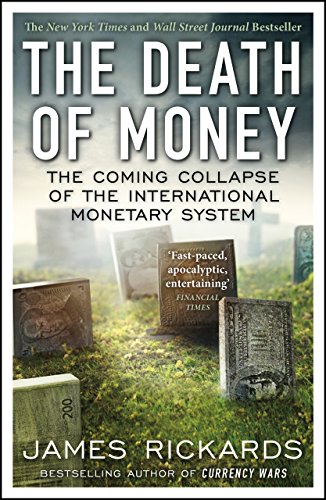
[B224.Ebook] PDF Download The Death of Money: The Coming Collapse of the International Monetary System, by James Rickards

PDF Download The Death of Money: The Coming Collapse of the International Monetary System, by James Rickards

For everyone, if you want to begin joining with others to review a book, this The Death Of Money: The Coming Collapse Of The International Monetary System, By James Rickards is much advised. As well as you should obtain the book The Death Of Money: The Coming Collapse Of The International Monetary System, By James Rickards below, in the link download that we offer. Why should be here? If you want other kind of publications, you will consistently locate them as well as The Death Of Money: The Coming Collapse Of The International Monetary System, By James Rickards Economics, national politics, social, sciences, religions, Fictions, and much more publications are supplied. These offered publications are in the soft data.

The Death of Money: The Coming Collapse of the International Monetary System, by James Rickards

The Death of Money: The Coming Collapse of the International Monetary System, by James Rickards


The Death of Money: The Coming Collapse of the International Monetary System, by James Rickards

PDF Download The Death of Money: The Coming Collapse of the International Monetary System, by James Rickards

Some individuals could be giggling when looking at you checking out The Death Of Money: The Coming Collapse Of The International Monetary System, By James Rickards in your downtime. Some may be appreciated of you. And also some might want be like you who have reading hobby. Just what regarding your very own feel? Have you felt right? Reviewing The Death Of Money: The Coming Collapse Of The International Monetary System, By James Rickards is a demand and also a hobby simultaneously. This problem is the on that will make you really feel that you need to read. If you know are looking for the book qualified The Death Of Money: The Coming Collapse Of The International Monetary System, By James Rickards as the selection of reading, you can locate below.

The benefits to take for reviewing guides The Death Of Money: The Coming Collapse Of The International Monetary System, By James Rickards are involving improve your life quality. The life quality will not just regarding the amount of expertise you will gain. Also you review the fun or entertaining publications, it will assist you to have boosting life high quality. Feeling enjoyable will lead you to do something flawlessly. In addition, guide The Death Of Money: The Coming Collapse Of The International Monetary System, By James Rickards will certainly provide you the driving lesson to take as a good factor to do something. You might not be useless when reviewing this publication The Death Of Money: The Coming Collapse Of The International Monetary System, By James Rickards

Never mind if you don't have enough time to go to guide establishment and also search for the preferred book to check out. Nowadays, the on-line book The Death Of Money: The Coming Collapse Of The International Monetary System, By James Rickards is pertaining to provide convenience of reading habit. You might not should go outside to browse the publication The Death Of Money: The Coming Collapse Of The International Monetary System, By James Rickards Searching and downloading and install guide qualify The Death Of Money: The Coming Collapse Of The International Monetary System, By James Rickards in this short article will certainly offer you far better solution. Yeah, online publication The Death Of Money: The Coming Collapse Of The International Monetary System, By James Rickards is a type of electronic book that you could enter the web link download offered.

Why need to be this on the internet book The Death Of Money: The Coming Collapse Of The International Monetary System, By James Rickards You could not should go someplace to check out the publications. You can review this publication The Death Of Money: The Coming Collapse Of The International Monetary System, By James Rickards every single time as well as every where you want. Even it remains in our downtime or feeling bored of the works in the office, this is right for you. Obtain this The Death Of Money: The Coming Collapse Of The International Monetary System, By James Rickards right now as well as be the quickest person who completes reading this book The Death Of Money: The Coming Collapse Of The International Monetary System, By James Rickards

The Death of Money: The Coming Collapse of the International Monetary System, by James Rickards

The next financial collapse will resemble nothing in history. . . . Deciding upon the best course to follow will require comprehending a minefield of risks, while poised at a crossroads, pondering the death of the dollar.

The U.S. dollar has been the global reserve currency since the end of World War II. If the dollar fails, the entire international monetary system will fail with it. But optimists have always said, in essence, that confidence in the dollar will never truly be shaken, no matter how high our national debt or how dysfunctional our government.

In the last few years, however, the risks have become too big to ignore. While Washington is gridlocked, our biggest rivals—China, Russia, and the oil-producing nations of the Middle East—are doing everything possible to end U.S. monetary hegemony. The potential results: Financial warfare. Deflation. Hyperinflation. Market collapse. Chaos.

James Rickards, the acclaimed author of Currency Wars, shows why money itself is now at risk and what we can all do to protect ourselves. He explains the power of converting unreliable investments into real wealth: gold, land, fine art, and other long-term stores of value.

  • Sales Rank: #887299 in Books
  • Brand: imusti
  • Published on: 2015-01-01
  • Original language: English
  • Dimensions: 7.80" h x .87" w x 5.08" l, .55 pounds
  • Binding: Paperback
Features
  • PENGUIN GROUP

Review
"A fast-paced and apocalyptic look at the financial future, taking in financiers' greed, central banks' incompetence and impending Armageddon for the dollar...Rickards may be right that 'the system is going wobbly.'"
—The Financial Times

"The Death of Money makes a valuable contribution to our economic discourse."
—Forbes

"James Rickards' The Death of Money is ... making it a veritable golden age for smart books on the current state of the global economy." 
—Politico

“A terrifically interesting and useful book . . . fascinating.”
—KENNETH W. DAM, former deputy secretary of the Treasury and adviser to three presidents

“The Death of Money contains very big, provocative ideas clearly explained and delivered in an evenhanded tone that steers away from the sensational proclamation yet successfully undercuts conventional market wisdom. Rickards’s insight enables him to connect the dots in a way that few others can. A worthy successor to Currency Wars.”
—JOHN HATHAWAY, portfolio manager, Tocqueville Gold Fund

“The Death of Money is an engrossing account of the massive stresses accumulating in the global financial system, especially since the 2008 financial crisis. Jim Rickards is a natural teacher. Any serious student of financial crises and their root causes needs to read this book.”
—JOHN H. MAKIN, PH.D., resident scholar, American Enterprise Institute; former chief economist, Caxton Associates

“A crucial primer for investors and consumers for what lies immediately ahead for the United States and a world that remains entirely dependent upon the dollar. The Death of Money is an important new book for those who worry about the future of our country.”
—R. CHRISTOPHER WHALEN, noted bank analyst; author of Inflated

“Rickards’s analysis of the inflation-deflation paradox, dangerous adversaries to the dollar, and the Fed’s strategy is insightful. Following his bestseller Currency Wars, this book is even better. A great book makes you think differently about the world—and this one does just that.”
—DON YOUNG, twenty-five-time Institutional Investor All-Star Analyst; former board member, Financial Accounting Standards Board

About the Author
James Rickards is the author of the acclaimed national bestseller Currency Wars, which has been translated around the world. He is a portfolio manager at West Shore Group and an adviser on international economics and financial threats to the Department of Defense and the U.S. intelligence community. He lives in Connecticut.

Most helpful customer reviews

924 of 958 people found the following review helpful.
Offers many fresh perspectives while covering familiar ground en route to commonly stated conclusions
By Graham H. Seibert
The introduction suggests that this book is going to rehash some fairly common themes. Then, delightfully, the first chapters veers off on an unexpected tangent, followed by an equally astute, and unexpected second chapter.

The introduction suggests that we are in for a time of either inflation or deflation, and that they are both equally dangerous. The thesis he repeats throughout the book is that central banks favor inflation for a number of reasons, but that they are having a hard time forcing inflation it to occur. There is simply too much slack in the economy in the form of unused labor, capital, and production capacity. Other authors argue that increases in productivity are inherently deflationary: if automation reduces the cost of manufacturing a car, competitive pressures will force manufacturers to sell them cheaper.

The federal government must have inflation for four reasons. Deflation causes an increase in the real value of the federal debt. It has an adverse impact on the debt to GDP ratio. Third, although banks may benefit initially by being repaid more than they lent, the risk of default increases dramatically in a deflationary environment. The fourth and final problem with deflation is that it reduces federal tax income. As nominal earnings decrease, the tax rate schedules, which are graduated, yield less revenue in real terms. Though asset value may rise in real terms, you cannot tax capital gains unless the nominal value rises.

Central banks throughout the world are fighting the tide as they work to promote inflation. The result of Quantitative Easing has been massive malinvestment by those to whom the newly coined money has been funneled.

Chapter One covers the financial signals that telegraphed the World Trade Center attack, had anybody been astute enough to parse the evidence. Rickards consulted with the CIA during the decade of the 2000s, looking for ways in which markets predicted attacks on American interests. In analyzing how the terrorists benefitted financially from their own act, he offers a broad discussion of financial forensics. He matter-of-factly documents overwhelming evidence of insider trading and market manipulation. These are not central to his theme, except insofar as obviously rigged markets make investors wary.

Chapter Two discusses financial warfare. The key insight is that state actors are often more interested in relative than absolute strength. Every war has costs, but if country A can destroy country B at an acceptable cost to itself, it may do so. Destroying the dollar would have a major impact on dollar holders such as China, but at the same time increase their relative strength in the world. His analysis of the way the US used finance to cripple Iran and Syria is quite insightful. As Russia and China free themselves from reliance on the dollar, they might do the same to us.

Chapter Three analyzes the increased involvement of central banks in the economies of their countries, and the general ill effects of central planning. It didn't work for the communists, and it doesn't work for Yellen. The Fed gets tangled up when it targets inflation and unemployment statistics, when its own actions influence those statistics, and the Federal Government has ample room to fudge the measurement of the statistics. Any policy can be justified.

Of the four causes of economic depression, Rickards claims that the greatest is regime uncertainty. People refuse to invest when the rules keep changing. Amity Shlaes and others have concluded that Roosevelt prolonged the Depression by constantly changing the rules for labor unions and other politically favored groups. And Obama is doing the same, with the same result. Entrepreneurs are reluctant to invest, leaving a lot of capital and labor idle.

Fed policy of low interest rates is forcing people to take unusual risks in pursuit of a return. Neither common people nor money managers find it easy to sit tight and accept a zero return on capital for any period of time. Instead, they have been stampeded into the only games in town - overinflated real estate (again) and a rigged stock market. Interest rates, and especially the price of gold, have been forced down in order to push money into these bubbles.

Chapter Four focuses on China, beginning with a sweeping historical overview of the world's longest lived civilization. He observes that it swings rather regularly back and forth between centralization and decentralization, each in turn cleaning out the excesses of the other. This is a time of great malinvestment. Whereas consumers account for 71% of US spending, the figure for China is only 35%. For investment, it is 13% vs. 48%. The latter is an absurd figure, including vast amounts of malinvestment: empty cities, trains to nowhere, and the like. As in the US, the middle class is the victim. As their savings receive negative rates of return, vast amounts of money go into mutual-fund type vehicles which in turn invest in the bubble. It will not end well.

Though China, with $3 trillion in assets, could put its financial house in order, it will not. The powers that be make their money from the malinvestment. The growing wealth disparity represents a major threat to the regime.

Chapter Five is on Germany and the Euro Zone. It is refreshingly different from the mostly negative analyses most authors offer. He gives good reasons why the Euro should survive as a currency and cites optimistic statistics about the progress that the PIIGS, especially Greece, have made in cleaning up their economies. In particular he notes that contrary to the Keynes/Krugman theory of "sticky wages," wage rates have been able to fall by a whopping 22% even without abandoning the Euro. Moreover, Greece is attracting new investment.

The Euro zone is continuing to expand, with the recent admission of Latvia and Croatia, and the potential membership of Serbia, Macedonia and Turkey.

On the other hand, the Euro zone does suffer from a lack of uniformity in banking standards and deposit insurance. A bigger problem is that few of the member states meet the requirements for keeping their finances in order. They are to run deficits of no more than 3% if their Debt/GDP ratio is less than 60 (very few of them) and no more than ½ percent if debt is higher.

Chapter Six begins with a discussion of the BRICS, then goes on to the GIIPS (nice acronym for the PIIGS) and BELLS. The latter - Bulgaria, Estonia, Latvia and Lithuania - was new to me. His major point is that the BELLS swallowed their medicine after the crisis of 2008, accepting a plunge in the GDP and austerity, refusing to devalue, in order to retain investor confidence. The PIIGS did what the US has done - print money, in some cases devalue, and pretend the problem will go away. The BELLS have fared quite well - the PIIGS not so well.

He has a wonderful quote on Russia: "The Russian economy is best understood as a natural-resource-extraction racket run by oligarchs and politicians who skim enormous amounts off the top and reinvest just enough to keep the game going." That has been the game here in Ukraine as well, and the Maidan revolutions of 2004 and 2013 are attempts to wrench the country free of the oligarchs.

Chapter 7 - Debt, deficits and the dollar

What is the meaning of money? The classical definition is (1) a store of value, (2) a medium of exchange, and (3) a unit of account. These meanings are important, and Rickards has a great dissertation on the various points of view. This is a matter of practical import. Is gold money? Is Bitcoin money?

He offers an interesting view. We are already on the gold standard, in that anybody who wants to is free to buy gold and use it as a store of wealth. It is not in governments' interest that we do so, which is why they echo Keynes, calling it a "barbarous relic" and openly manipulate its price to make it unattractive. One reads so much about the manipulation that it is worth citing other sources. It is a major theme on zerohedge. Paul Craig Roberts did a good piece in January. The Gold Antitrust Committee covers it regularly, and I review Geheime Goldpolitik: Warum die Zentralbanken den Goldpreis steuern (German Edition).

Rickards says that government investment is justified if it satisfies three conditions: (1) only government could do it, (2) they can afford it, and (3) it has a positive return on investment. Two positive investments were the Interstate Highway System and the Internet. Most government investments, including just about everything Obama has done, do not qualify. They channel money the government cannot afford (has to print) to favored groups for investments (solar, education) which will never pay for themselves.

Chapter 8 is on the IMF, the banker to the world. At present the IMF's balance sheet is only about 600 billion, small compared to those of the central banks. His point is that the IMF is the ultimate backup when central banks fail. The IMF has recently, quietly gotten permission to act like a bank, lending in excess of the asset base formed by member-state quotas. The currently allowed ratio is a conservative (for banks) 3:1. But - the mechanism is in place to print vast amounts, if and when the world's central banks get in trouble.

The most interesting part of the chapter is a portrait of Dr. Min Zhu, the Chinese deputy to Christine Lagarde. He is a man who has seen both the Chinese and the Western systems, is smart enough to see the inherent contradictions within the IMF, and sometimes sufficiently candid to coyly reveal what he knows. A nice portrait. NB: Other illumination portraits in previous chapters include Andy Marshall of the Pentagon and Randy Tauss of the CIA. Rickards knows them not merely as a writer, but from having worked intimately with them.

One of the truths that is widely known in financial circles, but seldom admitted, is that today's economic problems are primarily structural rather than cyclical. Don't blame it on the business cycle. The changes in demography, technology and society are structural and will not reverse themselves. Neither Japan nor China will sprout a generation of new workers overnight. In the US, the number of people entitled to entitlements will not shrink; neither will the cost of "free" medicine.

His thesis is that the SDR, the IMF "currency" formed of a market basket of national currencies, could become a world currency. Moreover, it could, if his suggestions were followed, be pegged to gold as a deterrent to uncontrollable fiat currencies.

Chapter 9 - Gold

This is the meat of the matter. Gold is money. The purest money. It is not a commodity, despite where it may be traded, because unlike commodities it is rarely consumed, but used almost exclusively as a store of value.

Rickards writes openly and authoritatively about the ways in which central banks and government manipulate the price of gold.

Chapter 10 - Crossroads

Rickards writes as a throwaway that our governments are manipulating all the markets. It is so widely accepted as not to require amplification.

There is massive malinvestment, from Chinese ghost cities to US student loans. While the problems could be fixed, the structure of our political systems will almost certainly not allow it. The vested interests are too strong.

Chapter 11 - Maelstrom

Rickards has referred to complexity theory often throughout the book. Here he amplifies the discussion. Systems, especially those involving human beings, are simply too complex to be predicted. One never knows, by analogy, which snowflake will trigger the avalanche. All you can know is that an avalanche is likely.

He says that the crunch time is here for the Federal Reserve. There is a term used in complexity theory: a system about to fail goes wobbly, much as the top stars to wobble when it runs out of centrifugal force. He says that the Federal Reserve is already there, and it is unable to fill any of its roles other than to continue to monetize debt.

Conclusion

This is the pay dirt. Rather like a Biblical prophet, he lists seven signs of the end times. And most useful, he gives his assessment of how to brace for the storm. He would own gold, land, hedge funds invested in hard assets, fine art and cash.

Rickards cites a relative handful of sources repeatedly: Krugman, Reinhart and Rogoff, Bernanke, and Robert Rubin's acolytes. While he has an occasional good word for each of them, he is properly scathing when appropriate.

Rickards is more willing to accept official statistics on unemployment, inflation and the like than others. He does not express skepticism as to whether or not the gold is still in Fort Knox. The skeptics are well known - look at zerohedge - and I find it impressive that he can build such a strong case for the imminent "death of money" even taking government claims and statistics at face value.

The book could have been endlessly large. Subjects which Rickards chooses not to address are the declining quality of our human resources - poor education, and the skew of childbearing to the least capable members of society, the inexorable rise in entitlement spending, and the decline of the work ethic. See Coming Apart: The State of White America, 1960-2010 for this discussion.

All in all, a masterful job by a man who has lived with his subject for most of a lifetime, and yet writes with the clarity of a lifelong author. A rare treat.

200 of 208 people found the following review helpful.
Plenty to chew on
By Erez Davidi
I very much enjoyed Rickards' first book, "Currency Wars." This was a very good sequel, although in my opinion it doesn't rise to the same level.

The premise of the book is fairly straight forward: The current monetary system is unsustainable and it's bound to collapse. It all can be boiled down to a few reasons: debt, structural problems in the world economy, derivatives, and out-of-control increases in the money supply.

According to Rickards, it's only a question of time. Monetary collapse can sound quite alarmist to some. (The over-the-top title, probably selected by the editor, doesn't help). However, Rickards points out, rightfully so, that it is not as uncommon as people tend to think. In the past century alone, the international monetary system changed three times; the first after WWI, the second after WWII (Bretton Woods agreement), the third was in 1971 after Nixon closed the gold window.

Even though I tend think that a change, at least to some degree, of the monetary system is definitely in the cards, I was not fully convinced by Rickards' arguments. As well, I found the first few chapters on the financial wars entirely unrelated to the premise of the book. Having said that, some chapters were original and intriguing, such as the chapters on the IMF, which will take the lead rule in the new monetary system to come.

I suspect that a lot of readers will not agree with everything Rickards has to say, but I also suspect that a lot of readers will learn something new by reading this thought-provoking book.

38 of 38 people found the following review helpful.
This is a great book...
By AndyS.
This is a great book, the second I have read by James Rickards. He's written the previous best selling book, "Currency Wars". Mr. Rickards has had a career in varied realms, he has degrees in Int'l. Economics (went to grad school with the likes of Timothy Geitner) and several legal disciplines. He's a regular on many MSM including CNBC where I first saw him about 8 years ago. He's an insider in more ways than one. Six years ago he pointed out that China was bent on accumulating gold to diversify their assets (boy was he right). Then 3 years ago he began talking about plans to revive an old 1960's era monetary maneuver which he called "Operation Twist", sure enogh a couple of months later the Fed announced Operation Twist which entailed buying long term US Treasury debt and selling short term. So when Mr. Rickards speaks I sit up and listen. In this book he talks about what is bound to happen with our present US$ based monetary system, how to recognize what is happening and the various ways this could play out. None of the three scenarios is good for us here in the USA, however, there are ways to prepare for these eventualities, woe to the unprepared. One likely way this could play out is by the IMF assuming the task of issuing world currency in the guise of the SDR which was first issued in the 1970's and has once again been undergoing much expansion on their balance sheet since the 2008 near meltdown.

“The next financial collapse will resemble nothing in history. . . . Deciding upon the best course to follow will require comprehending a minefield of risks, while poised at a crossroads, pondering the death of the dollar.”

"The international monetary system has collapsed three times in the past hundred years, in 1914, 1939, and 1971. Each collapse was followed by a period of tumult: war, civil unrest, or significant damage to the stability of the global economy".

Mr.Rickards shows why another collapse is rapidly approaching and this time it will be bigger than the Fed.

"The American dollar has been the global reserve currency since the end of the Second World War. If the dollar fails, the entire international monetary system will fail with it. No other currency has the deep, liquid pools of assets needed to do the job.

Optimists have always said, in essence, that there’s nothing to worry about—that confidence in the dollar will never truly be shaken, no matter how high our national debt or how dysfunctional our government. But in the last few years, the risks have become too big to ignore. While Washington is gridlocked and unable to make progress on our long-term problems, our biggest economic competitors—China, Russia, and the oilproducing nations of the Middle East—are doing everything possible to end U.S. monetary hegemony. The potential results: Financial warfare. Deflation. Hyperinflation. Market collapse. Chaos".

See all 714 customer reviews...

The Death of Money: The Coming Collapse of the International Monetary System, by James Rickards PDF
The Death of Money: The Coming Collapse of the International Monetary System, by James Rickards EPub
The Death of Money: The Coming Collapse of the International Monetary System, by James Rickards Doc
The Death of Money: The Coming Collapse of the International Monetary System, by James Rickards iBooks
The Death of Money: The Coming Collapse of the International Monetary System, by James Rickards rtf
The Death of Money: The Coming Collapse of the International Monetary System, by James Rickards Mobipocket
The Death of Money: The Coming Collapse of the International Monetary System, by James Rickards Kindle

The Death of Money: The Coming Collapse of the International Monetary System, by James Rickards PDF

The Death of Money: The Coming Collapse of the International Monetary System, by James Rickards PDF

The Death of Money: The Coming Collapse of the International Monetary System, by James Rickards PDF